Ego death is a common term in discussions about spirituality and deep self-reflection. The term may sound unsettling or even frightening, but it actually describes a radical shift in how you see yourself and the world around you. Understanding the signs of ego death can help you recognize and navigate this experience with greater clarity and confidence.
What is Ego Death? – Ego Death Meaning
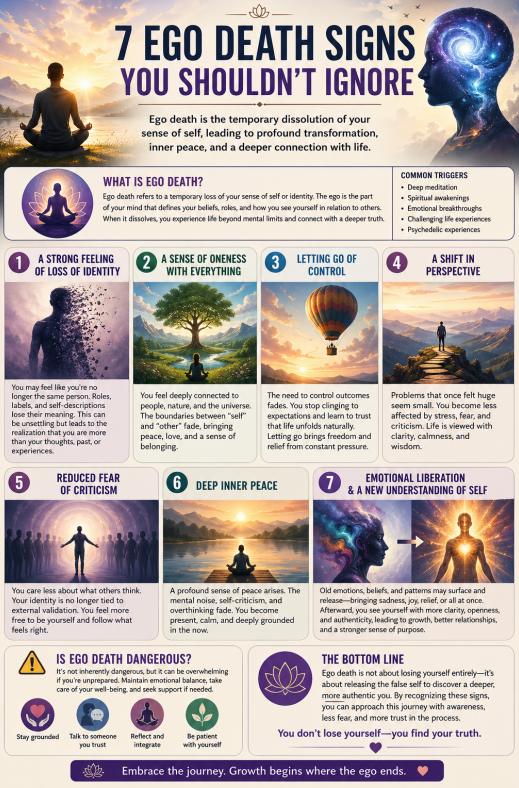
Ego death refers to a temporary loss of your sense of self. The “ego” is the part of your mind that defines your identity, beliefs, and how you see yourself in relation to others. When ego death occurs, that identity fades or dissolves, allowing you to experience life without the usual mental constraints.
This can happen through deep meditation, or sometimes during challenging life experiences. While it may seem confusing at first, many describe it as a profound transformation.
1 – A Strong Feeling of Loss of Identity
One of the most common signs of ego death is the feeling that your identity is fading away. You may feel like you’re no longer the same person, or that the descriptions you used to use to describe yourself no longer make sense.
This can be confusing or even frightening at first. However, it often leads to a deeper understanding that you are more than just your thoughts, roles, or past experiences.
2- A sense of oneness with everything
Another key sign is a strong sense of connection to the world. Instead of feeling disconnected from others, you may feel a deep connection to people, nature, or even the universe itself.
This sense of oneness brings peace and a sense of belonging. Many describe it as realizing that everything is interconnected, and that the boundaries between “self” and “other” aren’t as real as they thought they were.
3 – Letting go of control as a sign of Ego Death
During the ego demise phase, you may notice that your need to control everything begins to fade. You stop trying to impose outcomes or cling to expectations.
This doesn’t mean you stop caring about your life. It simply means you begin to trust that things unfold more naturally. Letting go can feel liberating, as the pressure to control every situation disappears. A Shift in Perspective
Ego death often brings about a radical shift in how you see things. Problems that once seemed enormous may suddenly appear small or insignificant.
You may also become less affected by stress, criticism, or fear. This shift in perspective allows you to approach life calmly and thoughtfully, rather than reacting emotionally.
4 – Reduced Fear of Criticism
Another sign is a decreased concern for what others think of you. Since your identity is no longer tied to external validation, you feel more comfortable expressing yourself.
This can lead to greater self-confidence and authenticity. You are less likely to act out of fear of criticism and more likely to follow what feels right.
5 – Deep Inner Peace
Many people report a profound sense of peace during or after ego annihilation. Even if the experience itself is intense, it is often followed by a sense of calm and clarity.
This inner peace comes from letting go of constant mental noise, self-criticism, and overthinking. You begin to fully experience the present moment.
6- Emotional Liberation
Ego annihilation may also involve the release of deep emotions. You may feel sadness, joy, or even relief all at once. This emotional liberation is part of the process of letting go of old beliefs and patterns. While it can be a powerful feeling, it often leads to healing and personal growth.
7 – A New Understanding of Self
After experiencing ego death, many find they see themselves in a new light. Instead of being defined by past experiences or rigid ideas, they feel more open and flexible. This new understanding often leads to personal growth, improved relationships, and a stronger sense of purpose.
Is Ego Death Dangerous?
Ego death is not necessarily dangerous, but it can be overwhelming if you are not prepared for it. It is important to maintain your emotional balance and take care of your mental and emotional well-being.
If the experience feels too intense, talking to someone you trust or seeking professional support may be helpful. Integration is key, taking time to reflect on what you have experienced and how it affects your life.