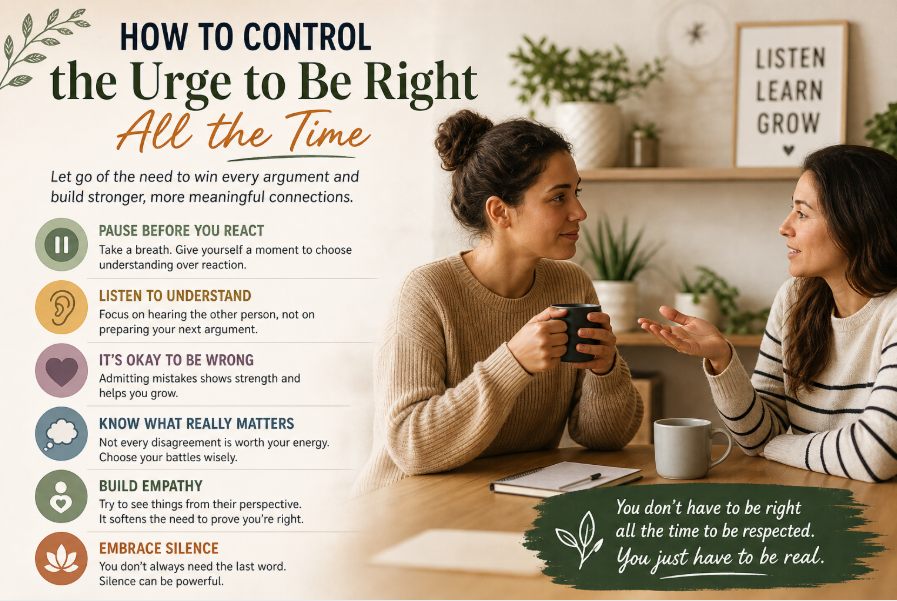
The desire to always be right often stems from a deep-seated need for validation, control, or self-protection. When you habitually equate your worth with being right, disagreements can feel like personal attacks rather than simply differences of opinion. This mindset can create underlying tension in relationships, making conversations feel like competitions instead of connections.
How Constantly Being Right Affects Your Relationships
Constantly trying to win an argument can alienate others, even if your intentions are good. Others may feel unheard, ignored, or judged, which can gradually break trust. Over time, this pattern can lead to fewer meaningful conversations, as people may avoid sharing their thoughts with you altogether.
Learning to Pause Before Reacting
One of the most important habits you can develop is pausing before responding. Instead of rushing to correct others, take a moment to breathe and reflect. This brief moment helps you choose understanding over reacting, giving you space to determine whether being right is truly important at that moment.
Switching from Winning to Understanding
Conversations become more positive when your goal shifts from winning to understanding. Try listening with genuine curiosity instead of preparing your next argument. When you focus on understanding others’ perspectives, you create a more open and respectful dialogue that benefits both parties.
Accepting That You Can Be Wrong
Letting go of the desire to be right means accepting that you don’t always have all the answers. Making mistakes isn’t a failure; it’s part of growth. When you allow yourself to admit your errors, you become more honest and approachable, and you’re more likely to earn their respect.
Practicing Emotional Awareness
The desire to prove yourself often stems from underlying feelings like insecurity or fear. Paying attention to your emotions during disagreements helps you better understand your reactions. When you become aware of these feelings, you gain more control over your responses instead of reacting automatically.
Choosing Your Battles Wisely
Not every disagreement warrants correction or confrontation. Ask yourself if the issue is truly important or worth the potential stress. Sometimes, letting things slide is a sign of strength, not weakness, and helps maintain peace in your relationships.
Building the Habit of Empathy
Empathy enables you to understand others’ perspectives without judgment. When you try to understand their point of view, your urge to prove them wrong diminishes, creating deeper and more meaningful connections.
Becoming Comfortable with Silence
You don’t always have to respond or correct others immediately. Silence can be powerful and respectful, showing that you are thinking and considering things, rather than acting impulsively. Over time, this habit reduces the pressure to always have the last word.
Growing into a More Balanced Mindset
Curbing the urge to be right doesn’t mean being silent or suppressing your opinions; it means finding balance. You can share your thoughts while remaining open, respectful, and willing to learn. This transformation not only improves your relationships, but also helps you become a calmer, more confident version of yourself.