Many people go through their day on autopilot without realizing it. They wake up, follow their daily routines, react to situations, and repeat the same patterns every day. This lifestyle may seem safe, but it often leads to a loss of awareness and purpose. Learning to become aware of your thoughts is the first step toward regaining control of your life.
What Does It Mean to Live on Autopilot?
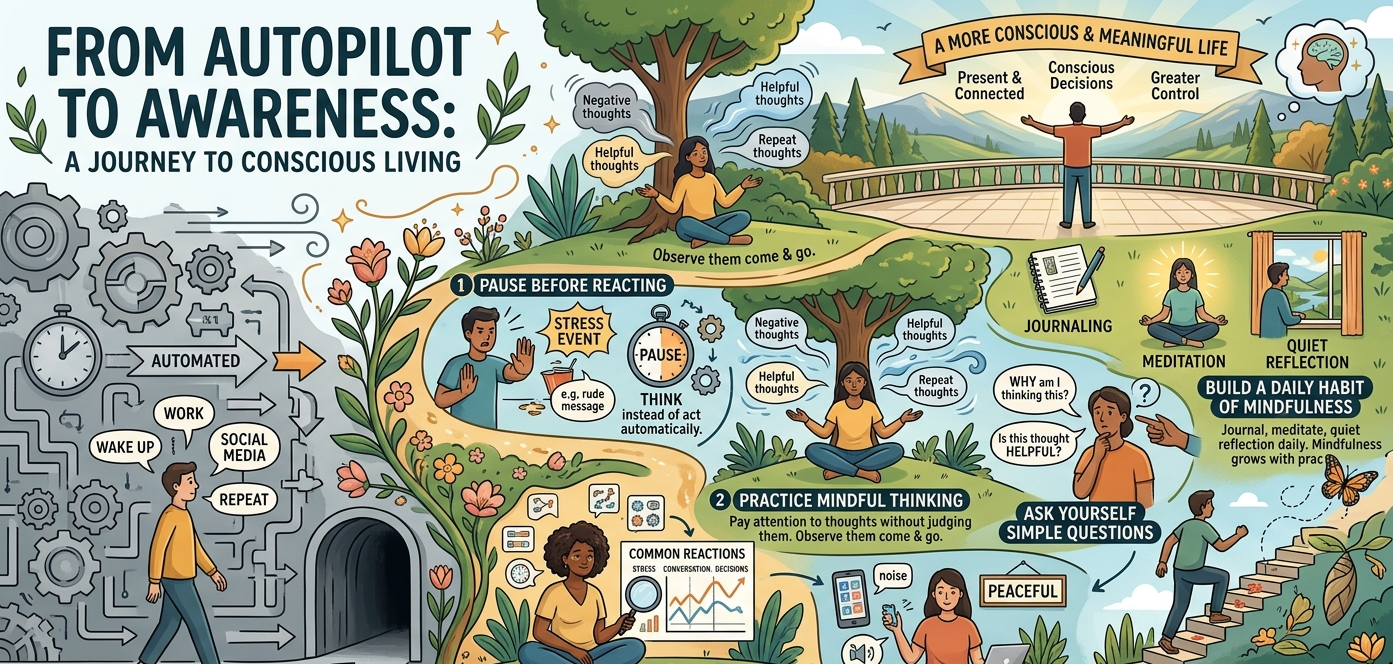
Living on autopilot means acting unconsciously. Your habits, feelings, and thoughts run automatically, and you simply follow them. This can happen when you are busy, stressed, or used to doing the same things every day. Over time, this creates a feeling of disconnection from your life.
Why Is Mindfulness Important?
Your thoughts shape your feelings, decisions, and actions. If you are not aware of them, they can control you without your permission. Negative or repetitive thoughts can affect your mood and behavior in ways you may not even notice. Awareness allows you to question these thoughts and choose a better response.
Observe your daily patterns
The first step to overcoming automaticity is observing your daily habits. Pay attention to how you react in common situations such as stressful moments, conversations, and decision-making. You may begin to notice patterns that repeat themselves without conscious thought. This awareness helps you understand what needs to change.
Pause before reacting
One simple yet effective habit is to pause before reacting to situations. When something happens, take a moment before responding. This brief pause gives you time to think instead of acting automatically. Over time, this fosters self-control and reduces impulsive behavior.
Practice mindful thinking
Mindful thinking means paying attention to your thoughts without judging them. Instead of trying to stop your thoughts, observe them as they come and go. This helps you understand what’s going on in your mind and prevents negative thought patterns.
Minimize distractions
Constant distractions make it easier to stay automatic. Social media, noise, and multitasking can all take your mind off things and break your focus. So, taking a break from distractions helps you reconnect with your thoughts. Even short periods of quiet can improve awareness.
Ask yourself simple questions
Asking yourself questions is a powerful way to stay mindful. Ask yourself questions like, “Why am I thinking about this?” or “Is this thought helpful?” These questions bring your attention back to the present moment and also help you challenge negative or unhelpful thoughts.
Build a daily habit of mindfulness
Mindfulness grows with practice. Simple habits like journaling, meditation, or quiet reflection help you stay connected to your thoughts. Doing this daily trains your mind to be more present. Over time, mindfulness becomes natural rather than forced.
Be patient with the process
Breaking free from automatic thinking takes time. You may revert to old habits, and that’s okay. The goal isn’t perfection, but progress. Every moment of mindfulness is a step toward a more conscious and meaningful life.
Breaking free from automatic habits begins with becoming aware of your thoughts. When you observe your mind instead of reacting automatically, you gain control over your actions and decisions. With consistent practice, you can transition from unconscious habits to a more present and conscious lifestyle.